Rynat Industries is unlocking industry opportunities and workplace diversity through apprenticeships.
Through its inclusive approach that integrates skills development and disability employment, the WA-based commercial bathroom fitout specialist is enhancing workplace diversity while cultivating a skilled workforce ready to meet the challenges of the industry.
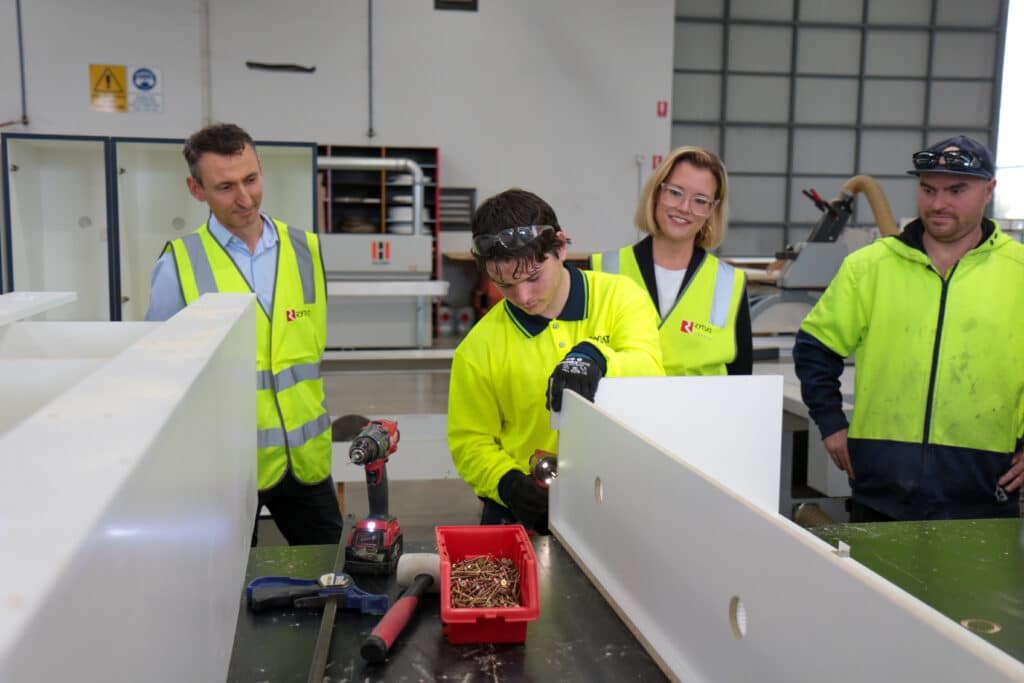
Oliver Grant, an 18-year-old apprentice with a hearing impairment pursuing a Certificate III in Cabinet Making and Timber Technology, is a case in point.
Grant is among the apprentices recruited by Rynat Industries, supported by Apprenticeship Support Australia, and is excited about the career prospect of becoming qualified.
“I want to get my trade certificate. I’m hoping to become a professional cabinet maker, and that will be my career,” says Grant.
He is inspired by his mentor and supervisor, Kyle Smith, a former apprentice who was born deaf.
With a passion in cabinet making, Grant encourages others with disabilities to keep trying when seeking employment.
“Don’t give up. Keep going. Just try your best,” he says.
Skills and experience take precedence
With a small and tight-knit team, the company prioritises removing barriers for employees so they can perform.
“They’re hired and they’re given the opportunity because they’re able to do the job,” says Rynat Industries Director Jay Wasson.
“We’re always interested in seeing them do well at the end of the day.
“We want them to succeed, because that means that the company’s winning.”
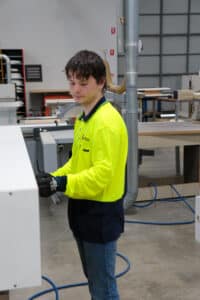
Wasson points out the importance of making small and simple changes, including: “The whiteboard that we use for the morning briefing, which is a great visual aid that complements our daily briefing, setting out the safety issues that we might be seeing.
“What I can see is good eye contact between them. They don’t talk over their shoulder at each other, he says.
“When we see them working around on the shop floor, we see mindfulness of each other and safety risks.”
The company has created an environment where employees can complete their work and studies alongside each other and feel supported.
“If we can focus on what skills and experience they bring and what outputs and outlook they can share with the rest of the team, those are the big positives, and any employer would want those in their workforce,” Wasson adds.